Chemical Industry
Reactors engineered for complex chemical synthesis — from fine chemicals to bulk intermediates
Chemical reactions are not uniform. Some generate heat faster than you can remove it. Others need extended residence times with gentle agitation. The right reactor depends on your reaction kinetics, not your budget. We calculate heat transfer area, agitation power, and residence time distribution before we cut steel.
Industry Challenges
Exothermic reactions can escape control if heat removal capacity is undersized. A jacket that looks adequate on paper may not match your actual reaction rate.
Poor agitator selection creates regions where reaction doesn't proceed uniformly. Product quality varies batch to batch.
Chlorides, strong acids, and high-temperature media degrade standard stainless steel. Wrong material choice means premature failure and unplanned shutdown.
Our Approach
We size jacket or internal coils based on your reaction kinetics data — not rules of thumb. If you need internal coils, we calculate the layout.
Pitch blade, anchor, helical ribbon, or custom — matched to your medium viscosity and mass transfer needs. No vortex, no dead zones.
304, 316L, duplex, Hastelloy, titanium, PTFE-lined — we flag issues early. If chlorides are present above 60°C, 304 will crack. We tell you before you order.
Typical Specifications
| Parameter | Specification |
|---|---|
| Volume Range | 100L – 50,000L |
| Materials | 304, 316L, Duplex, Hastelloy C276/C22, Titanium TA1/TA2 |
| Design Pressure | Up to 20 MPa |
| Heat Transfer | Jacketed, internal coils, external loop |
| Certifications | ASME VIII, GB150 |
| Seal Type | Magnetic coupling standard |
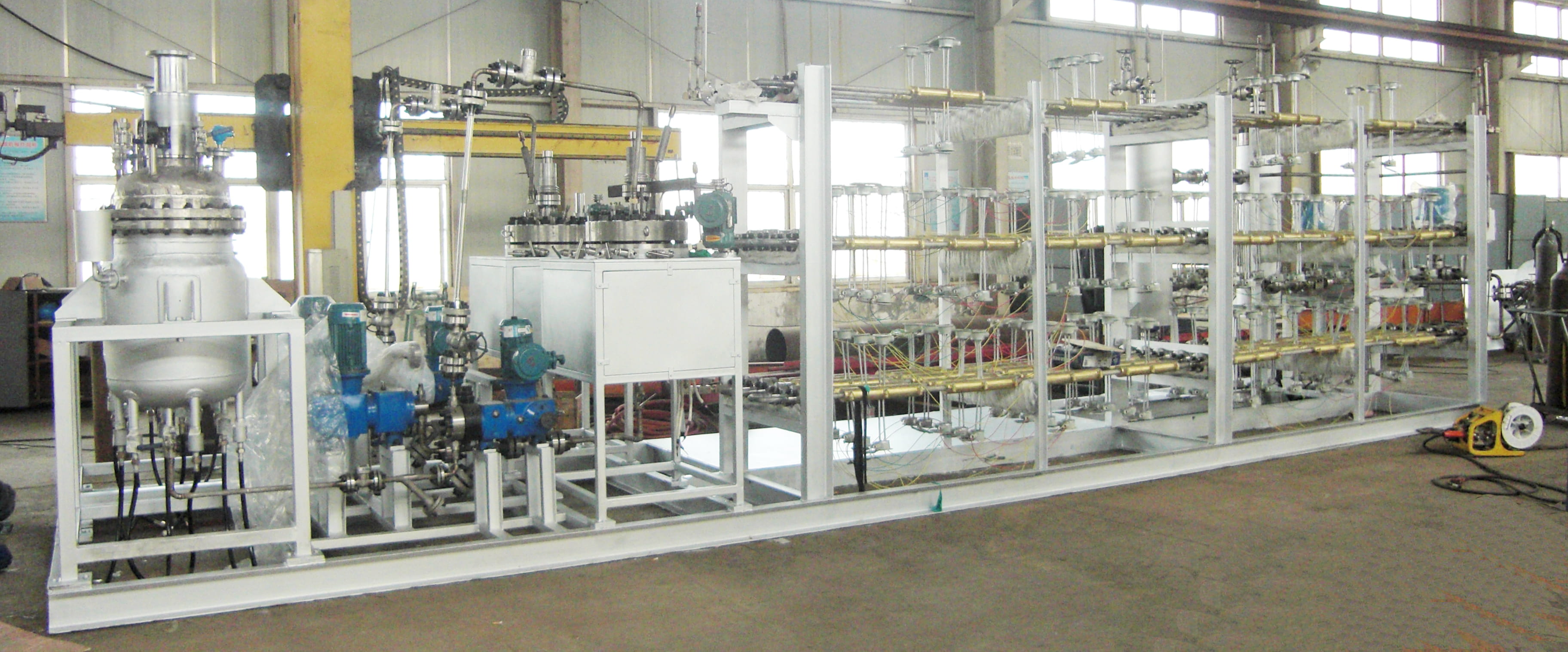
Related Cases
Tell us your medium, temperature, pressure, and volume requirements. We'll recommend the right reactor design and material within 24 hours.